Cyrano’s Final Battle and Death
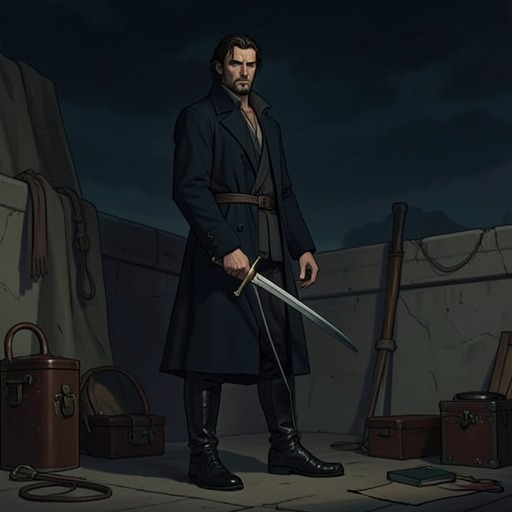
Cyrano de BergeracCyrano de Bergerac’s final battle is a struggle against death and the forces he refuses to let define him. As his body fails, he stands, confronts imagined enemies with his sword, and falls into the arms of Le Bret and Ragueneau. Roxane’s kiss and his last words, “MY PANACHE,” make his death a final assertion of the uncompromised identity he has defended throughout his life.
The Siege Behind the Ending
Earlier, the siege of Arras establishes the material pressures against which the play’s heroism unfolds. Carbon calls it disgraceful that the besiegers should themselves starve, while Le Bret observes that they have become trapped and besieged by the Cardinal Infante of Spain. The military predicament is not a simple advance against an enemy: the besieging force is also isolated and vulnerable.
De Guiche reports that the Marshal made a secret attempt the previous evening to bring supplies to the army. The attempt involved a substantial force, and half the army is absent from camp. Carbon recognizes the danger if the Spaniards learn of that absence. These details make the siege a contest shaped by hunger, exposure, and uncertain supply, not merely a stage for displays of courage.
Roxane gives the deprivation a personal, physical measure when she says the camp air has made her famished and orders pasties, cold fricassee, and old wines. De Guiche also reveals that he has had the army’s remaining cannon carried to a corner where the men can use it if necessary. The food and weaponry belong to different sides of the immediate crisis, but both show how survival depends on what can be brought into the camp and kept ready. This military background frames the play’s larger world of danger; the final death scene itself turns from the siege’s logistics to Cyrano’s private reckoning.
Death Met and Defied
In the last scene, grief briefly draws Cyrano back from an inward vision. After Le Bret’s anguished address, Cyrano suddenly starts up and calls, “What ho! Cadets of Gascony!” The cry summons the bold military identity associated with his companions, even as his body is nearing its end. The moment makes his final struggle resemble a return to the company and combat that have shaped his life, but the scene does not send him back to an actual battlefield.
Roxane’s sobs recall him to reality. He looks at her for a long time and touches her veil before telling her, “I would not bid you mourn less faithfully.” The gesture and the words connect his last lucid attention to Roxane with the fidelity of her mourning for Christian. He does not ask her to diminish that devotion. His farewell therefore preserves, rather than displaces, the grief that has bound her to the dead man.
Cyrano shivers, rises abruptly, and rejects the prospect of dying while seated: “Not there! what, seated?--no!” As his feet seem to turn to stone and his hands feel gloved with lead, he nevertheless stands erect. He states the choice that gives the scene its central turn: “But since Death comes, / I meet him still afoot.” The body announces its defeat, but his posture refuses surrender. His resistance is not a recovery; it is the last form his agency can take.
The Final Enemies
The scene gives Cyrano’s resistance a theatrical shape. When someone calls his name and those around him shrink back in terror, he interprets the moment as an insult to his nose: “He dares to mock my nose?” The line draws the bodily feature that has so often exposed him to ridicule into his final confrontation. Even at the threshold of death, he does not accept the mockery as the last word about himself.
He then recognizes, or declares that he recognizes, his old enemies: “Falsehood!” He strikes at the air with his sword and cries, “Have at you! Ha! and Compromise!” The stage direction makes clear that he is fighting empty air, not a visible opponent. The encounter is thus a last imagined combat in which the adversaries are named as moral forces. His resistance culminates in the claim that one thing remains unstained and that he will carry it away despite them. The words make integrity the prize of this final struggle, not victory over an external army.
The Fall and the Last Word
Cyrano springs forward with his sword raised, but it falls from his hand. He staggers and collapses into the arms of Le Bret and Ragueneau. The sequence gives his defiance a precise limit: he can meet death standing, but he cannot keep his weapon or hold himself upright. His friends receive the body that his will could no longer sustain.
Roxane bends and kisses his forehead. Cyrano opens his eyes, recognizes her, and smiles before speaking his final words: “MY PANACHE.” The phrase names the quality he has carried through his last imagined fight and makes the ending an answer to the humiliation and compromise he rejected. The curtain falls on that declaration. His death is not presented as a military victory or a restoration of his strength; it is the final scene in which he retains authorship over what his life means.